Subsidence is one of the most worrying structural issues a homeowner can face. It occurs when the ground beneath a property shifts or sinks, causing the building to settle unevenly. Left untreated, subsidence can lead to significant structural movement, cracked masonry, distorted openings, and long-term damage that becomes increasingly expensive to repair. Spotting the symptoms early is the key to reducing risk, managing costs, and protecting your home’s integrity.
Many homeowners overlook early warning signs, mistaking them for normal ageing or superficial cracks. But subsidence develops gradually, and the earliest clues often appear quietly. Recognising these indicators and acting quickly helps ensure that the issue is investigated before spreading into a serious structural problem.
This guide walks you through the early signs of subsidence, how to distinguish them from harmless defects, and why timing matters so much. The more proactive you are, the better chance you have of minimising structural impact and preventing costly repairs in the future.
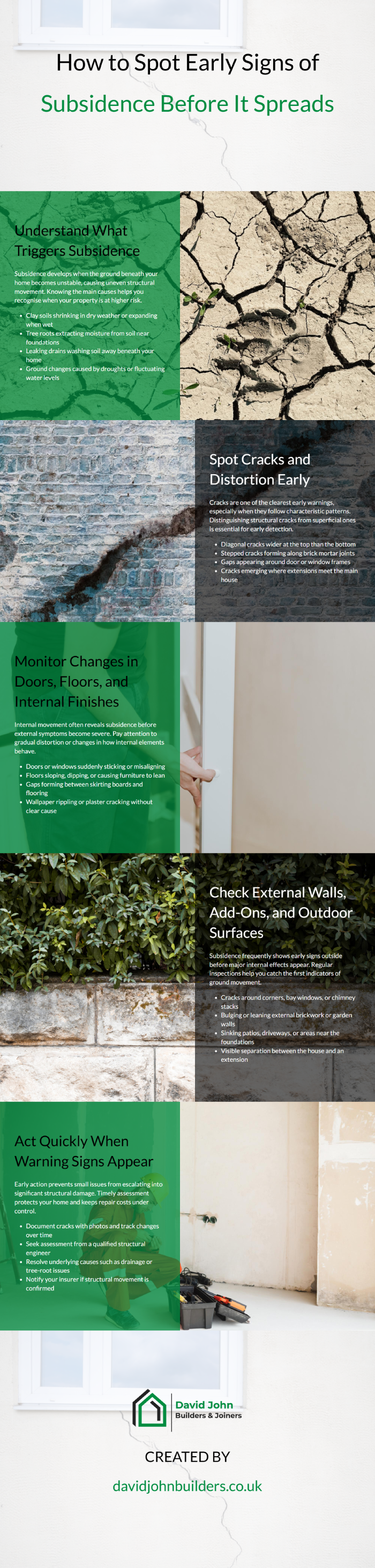
Understand What Causes Subsidence Before Looking for Signs
Before you can recognise subsidence, it helps to understand why it happens. Subsidence typically develops due to ground instability beneath the foundations. This instability might be caused by soil shrinkage, tree roots absorbing moisture, leaking drains washing soil away, or changes in groundwater levels. Each cause affects the ground differently, but all lead to uneven structural settlement.
Knowing the main causes helps you identify high-risk conditions around your property. Soil type, nearby vegetation, drainage condition, and weather patterns all influence how likely a home is to experience subsidence. When these risks are present, homeowners should be especially alert to early warning signs.
Understanding what triggers subsidence gives you a strong foundation for spotting issues before they advance.
- Identify whether your home sits on clay, chalk, sand, or mixed soil
- Assess large trees or vegetation near your property’s foundations
- Monitor drainage systems for leaks that may erode surrounding soil
- Be aware of drought conditions that cause soil contraction
Look for Cracks That Show Specific Patterns and Behaviour
Cracks are one of the most common early signs of subsidence, but not all cracks are cause for alarm. Many homes develop small cosmetic cracks over time due to temperature changes or material settlement. Subsidence-related cracks, however, follow characteristic patterns that set them apart.
These cracks are usually wider at the top than the bottom, form stepped patterns along mortar joints, or appear suddenly rather than gradually. They often run diagonally and may widen over months. Cracks around door frames, windows, or corners of extensions are especially concerning, as these areas are more sensitive to structural movement. Monitoring size and progression helps determine whether professional assessment is needed.
Spotting these distinctive crack behaviours early helps catch subsidence before wide structural movement occurs.
- Look for diagonal cracks wider than 3 mm, especially around windows or doors
- Monitor cracks that grow or widen over a short period
- Identify stepped cracks running along brickwork mortar lines
- Check for cracks where different parts of the building meet, such as extensions
Check for Doors and Windows Becoming Difficult to Open or Close
When the structure of a house shifts unevenly, it places stress on frames, hinges, and openings. One early sign of subsidence is stiff, jammed, or misaligned windows and doors. These issues happen because the frames become warped or tilted as the building moves on its foundations.
Unlike minor seasonal swelling of timber frames, subsidence-related distortion typically persists, worsens gradually, or affects multiple openings in the same area of the home. Sticking doors may no longer latch, or you may notice daylight gaps between the frame and the door. These changes are often subtle at first but become more pronounced as movement continues.
Being aware of changes in door and window behaviour provides an important early clue in identifying structural issues.
- Note if doors or windows suddenly become hard to open or close
- Look for gaps appearing around frames or uneven contact points
- Check whether multiple openings in the same area are affected
- Monitor misalignment that continues through different seasons
Inspect Floors and Skirting Boards for Unevenness or Movement
Uneven floors, separating skirting boards, or visible dips in flooring can signal that the building is shifting. Subsidence affects the level of internal surfaces because the structure is no longer supported uniformly. These signs are often more noticeable in older homes but should never be ignored.
You may notice sloping floors, furniture leaning slightly, or gaps appearing between skirting boards and the floor. In some cases, tiles may crack or grout lines may separate as the subfloor moves. These symptoms suggest vertical or lateral ground movement beneath your property and warrant further investigation.
Interior movement often reflects deeper structural change, making these indicators particularly important.
- Check for sloping floors or furniture that leans unexpectedly
- Look for gaps between skirting boards and flooring
- Inspect cracked floor tiles or splitting grout lines
- Note any movement or lifting of floorboards in specific areas
Watch for External Changes in Brickwork and Foundations
Many early warning signs appear on the exterior of the home. Subsidence often causes bricks to separate, mortar to crumble, or walls to bulge subtly. These changes may be small at first but are significant markers of structural movement that should be addressed early.
Examine the external walls for cracks, particularly around weak points such as corners, chimney stacks, and wall junctions. You may also spot gaps forming between brickwork and other structural elements like bay windows or porches. Even small separations can indicate early ground movement and require monitoring.
Regularly inspecting the outside of your property helps you catch changes that may not be noticeable indoors.
- Check for cracks around corners, bay windows, and junctions
- Inspect mortar for signs of crumbling or separation
- Look for bulging, leaning, or bowed external walls
- Observe gaps forming between the house and attached structures
Monitor Extensions, Conservatories, and Add-Ons Closely
Extensions and add-on structures often show signs of subsidence earlier than the main property because their foundations may be shallower or built on different ground conditions. If the extension moves independently from the main house, cracks or separations can appear at the joint line where the two structures meet.
Spotting these gaps early can prevent significant damage. Movement in extensions may also cause roofline misalignment, internal cracks, sticking doors, or visible gaps between walls and ceilings. Conservatories are especially vulnerable due to lightweight construction and variable foundations.
Monitoring these areas is crucial, as they provide some of the clearest early indicators of ground movement.
- Look for cracks where the extension joins the main house
- Check conservatory frames for distortion or gaps
- Inspect rooflines for sagging or misalignment
- Monitor newer additions more frequently than original structures
Be Alert to Rippling Wallpaper and Movement in Internal Finishes
While wallpaper movement may seem minor, it can be an early sign of deeper structural issues. When walls shift even slightly, wallpaper can ripple, crease, or detach despite no visible cracks in the plaster beneath. These subtle changes often indicate movement that has not yet surfaced in more obvious ways.
You may also notice changes in plaster finishes, such as fine cracks expanding or new marks appearing along stress points. In some cases, coving may begin to separate from walls or ceilings. These visual clues, though small, are important for identifying developing subsidence early.
Paying attention to changes in interior finishes helps catch movement before structural issues escalate.
- Note wallpaper ripples or creases with no apparent cause
- Look for plaster cracks forming or worsening unexpectedly
- Check coving for signs of separation or misalignment
- Investigate any repeated decorative issues in the same location
Examine Outdoor Areas for Ground Changes
Subsidence often shows early clues in the outdoor environment. Changes in ground level, sinking patios, tilting garden walls, or cracks in paving can all reflect instability beneath the property. These indicators may appear long before signs inside the home.
If the ground sinks near the foundations or driveways begin to dip, it may suggest soil movement consistent with subsidence. Retaining walls pulling away or cracking can also be a clear signal of shifting loads. Monitoring these outdoor elements helps build a more complete picture of potential issues.
Outdoor awareness helps you detect early movement before it reaches your home’s structural core.
- Look for sinking or uneven patios, driveways, or paths
- Check retaining or garden walls for cracks or leaning
- Monitor depressions forming around the base of the house
- Watch for changes after heavy rain or prolonged dry periods
Understand the Difference Between Subsidence and Settlement
Not all movement is subsidence. Settlement is common in newer homes and occurs when the structure naturally beds into the foundations during the first few years after construction. Settlement cracks are usually vertical, fine, and stabilise over time. Subsidence-related cracks, on the other hand, are diagonal, wider, and continue to progress.
Understanding the difference prevents unnecessary concern and ensures you take action only when needed. Subsidence requires professional investigation, whereas settlement often does not. Recognising which type of movement your home is experiencing helps you respond appropriately.
Knowing how to distinguish between the two saves time, money, and stress.
- Settlement cracks are usually fine, vertical, and non-progressive
- Subsidence cracks widen, run diagonally, and appear suddenly
- New-builds are more prone to settlement rather than subsidence
- Monitor crack progression to identify ongoing movement
Take Action Quickly When Signs Are Identified
Early action is the most effective way to prevent subsidence from spreading. If you suspect movement, document the signs with photos, dates, and measurements. This helps track progression and provides valuable information for engineers or insurers.
Engaging a structural engineer early allows for accurate diagnosis and mitigation. They can assess the severity, determine the cause, and recommend solutions such as underpinning, drainage repairs, or root management. Acting quickly reduces long-term repair costs and prevents worsening structural issues.
Delaying action allows problems to escalate, increasing repair complexity and cost.
- Document cracks and movement with photos and regular measurements
- Contact a structural engineer for professional assessment
- Address underlying causes such as drainage issues or tree roots
- Inform your insurer if structural movement is confirmed
Conclusion
Spotting the early signs of subsidence is essential for protecting your home from serious structural damage. By monitoring cracks, checking external walls, tracking floor movement, observing door and window performance, and staying alert to outdoor changes, you can catch warning signs before they escalate. Understanding the causes also helps you identify when your property is most at risk.
Early intervention prevents costly repairs, supports long-term stability, and ensures your home remains safe and secure. With proactive observation and professional guidance when needed, subsidence becomes a manageable challenge rather than a disruptive crisis. Staying informed and vigilant protects both your property and your peace of mind.