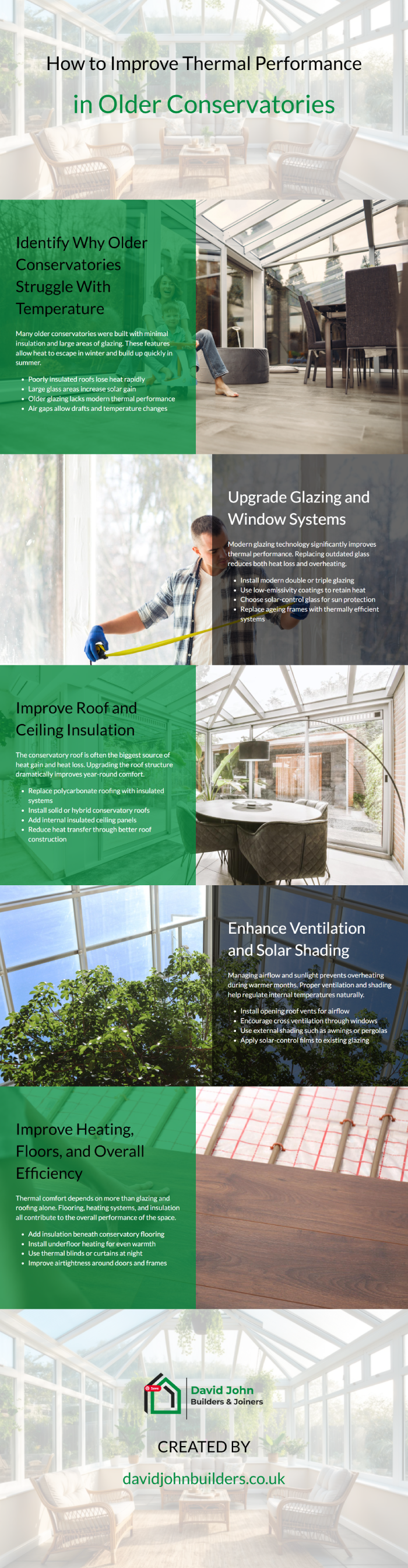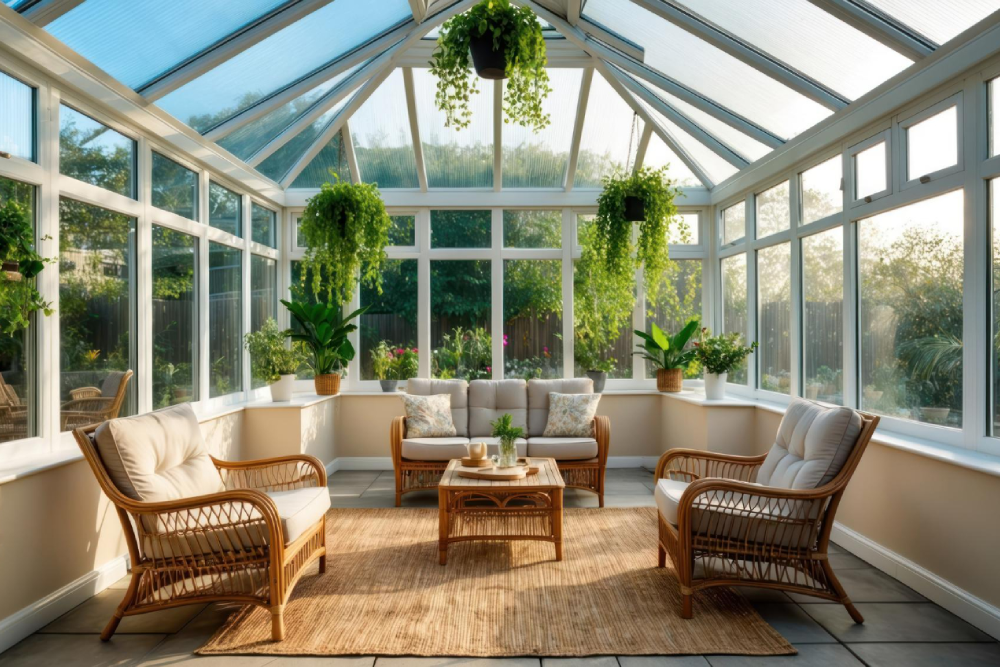
Older conservatories are a common feature in many UK homes, particularly those built in the 1990s and early 2000s. At the time, they were marketed as bright, affordable ways to extend living space without the complexity of a full extension. While they delivered extra room and plenty of daylight, many were not designed with long-term thermal performance in mind.
As a result, homeowners often find these spaces difficult to use throughout the year. Conservatories may become extremely hot during summer and noticeably cold during winter. This temperature imbalance can make them uncomfortable for daily living, turning what should be a valuable space into one that is only used occasionally.
The good news is that older conservatories can often be improved significantly without rebuilding them entirely. With the right upgrades to glazing, roofing, insulation, and ventilation, it is possible to transform a poorly performing conservatory into a comfortable room that can be enjoyed year-round.
This guide explains how to improve thermal performance in older conservatories. By addressing the key areas where heat is lost or gained, homeowners can create a more balanced indoor environment while improving energy efficiency and overall usability.
Replace Outdated Glazing With Modern High-Performance Units
Many older conservatories were built using early double glazing that offers limited insulation. Over time, glazing technology has improved significantly, with modern units designed to reduce heat loss and limit solar gain. Upgrading the glass can make an immediate difference to internal temperatures.
Modern glazing incorporates advanced coatings and improved gas-filled cavities between panes. These technologies help prevent heat from escaping during winter while also reflecting excess solar heat during warmer months. As a result, internal temperatures remain more stable throughout the year.
Upgrading glazing is one of the most effective improvements available.
- Replace early double glazing with modern energy-efficient units
- Use low-emissivity coatings to reduce heat loss
- Choose solar-control glass to limit overheating
- Ensure new glazing matches existing frame dimensions
Improve Roof Performance With Insulated Roofing Systems
The roof of an older conservatory is often the weakest point in terms of insulation. Traditional polycarbonate roofing panels offer minimal thermal resistance and allow large amounts of solar heat to enter during summer. Replacing or upgrading the roof dramatically improves comfort levels.
Modern insulated conservatory roofs use layered construction to regulate temperature. Solid or hybrid roofing systems can reduce heat transfer while maintaining natural light through integrated glazing panels. This balance allows the room to remain bright without suffering from extreme temperature swings.
Improving roof insulation significantly enhances thermal comfort.
- Replace polycarbonate roofing with insulated alternatives
- Consider tiled conservatory roof systems
- Use hybrid roofs with insulated panels and glazing
- Improve structural insulation within roof supports
Add Insulated Ceiling Panels or Plasterboard Finishes
Many homeowners choose to install internal insulated ceilings beneath existing conservatory roofs. This approach creates an additional thermal barrier that helps retain heat during winter and prevent overheating during summer.
An insulated ceiling also allows lighting to be integrated more effectively into the room. Recessed lighting and plasterboard finishes can transform the appearance of the conservatory while improving its energy performance.
Interior upgrades can make the space feel more like a traditional room.
- Install insulated ceiling panels beneath existing roofing
- Add plasterboard finishes to improve heat retention
- Integrate recessed lighting for a modern interior
- Reduce heat transfer through improved insulation layers
Seal Gaps and Improve Airtightness
Older conservatories often suffer from small gaps around frames, roof panels, or door connections. While these openings may seem minor, they allow heat to escape during winter and contribute to drafts and temperature fluctuations.
Improving airtightness reduces unwanted air movement and helps the heating system maintain consistent temperatures. Sealing these gaps is a relatively simple upgrade that can produce noticeable improvements.
Reducing air leakage improves efficiency.
- Inspect frame joints and roof connections
- Seal small gaps with appropriate weatherproof materials
- Replace worn seals around doors and windows
- Prevent cold drafts entering the space
Upgrade Floor Insulation Where Possible
Many conservatories were built with minimal floor insulation, especially when installed as lightweight structures on simple foundations. Cold floors contribute to overall heat loss and make the room uncomfortable during colder months.
Improving floor insulation helps maintain internal warmth while reducing heating demand. In some cases, installing new flooring with insulation layers beneath can significantly enhance comfort.
Floor upgrades contribute to overall thermal performance.
- Install insulated flooring systems where possible
- Add thermal underlay beneath new floor coverings
- Reduce cold transfer from the ground
- Improve comfort during winter use
Install Energy-Efficient Doors Between House and Conservatory
Older conservatories often connect directly to the main house without proper thermal separation. This means cold air can enter the house during winter and warm air from the conservatory can affect indoor temperatures during summer.
Installing energy-efficient doors between the house and conservatory allows better control of internal temperatures. This approach also helps reduce heat loss from the main property.
Thermal separation improves efficiency.
- Install insulated internal doors
- Use double-glazed patio or French doors
- Improve energy efficiency between spaces
- Allow flexible temperature control
Introduce Effective Ventilation Systems
Ventilation plays a crucial role in maintaining comfortable temperatures. Without adequate airflow, conservatories can trap warm air during sunny weather, leading to overheating.
Strategically placed vents or opening windows allow warm air to escape and fresh air to circulate. This simple improvement can significantly reduce summer temperature spikes.
Air movement prevents overheating.
- Install opening roof vents
- Use trickle vents in window frames
- Encourage cross ventilation through opposite openings
- Allow warm air to escape naturally
Use Solar-Control Window Films
If replacing glazing is not immediately practical, solar-control films offer a temporary solution for reducing solar heat gain. These films are applied directly to existing glass surfaces and reflect a portion of incoming sunlight.
While not as effective as replacing glazing entirely, they can noticeably reduce overheating during summer months.
Films provide a quick thermal improvement.
- Apply reflective solar-control films
- Reduce direct solar heat entering the room
- Improve comfort during sunny days
- Retain visibility and natural light
Install Shading Solutions for Sun Control
Shading is another effective method for managing heat levels. External shading blocks sunlight before it enters the conservatory, which is far more effective than internal blinds alone.
Pergolas, awnings, and external blinds provide flexible shading options while maintaining outdoor views.
Controlling sunlight reduces overheating.
- Install retractable awnings above glazing
- Use pergolas to create filtered shade
- Fit external blinds for adjustable coverage
- Reduce direct sun exposure on glass surfaces
Consider Underfloor Heating for Even Warmth
Traditional radiators often struggle to heat conservatories evenly because heat rises quickly toward the glass surfaces. Underfloor heating distributes warmth more consistently across the entire room.
When combined with improved insulation, underfloor heating can make a conservatory feel more like a standard extension.
Heating systems should complement insulation upgrades.
- Install underfloor heating systems where possible
- Distribute heat evenly across the space
- Reduce reliance on wall-mounted radiators
- Improve comfort during colder months
Use Thermal Curtains or Insulated Blinds
Internal window coverings can help regulate temperature when external shading is not available. Insulated blinds or thermal curtains create an additional barrier that slows heat transfer through glass.
These solutions are particularly helpful during winter evenings when temperatures drop quickly.
Window coverings enhance insulation.
- Install thermal blinds or insulated curtains
- Reduce heat loss through glazing
- Improve evening comfort levels
- Control sunlight during warmer days
Replace Inefficient Frames and Doors
Older conservatory frames may lack modern thermal breaks, allowing heat to transfer through the frame material itself. Replacing frames with modern energy-efficient systems can reduce heat loss.
This upgrade also improves durability and security.
Frame upgrades improve insulation performance.
- Install modern thermally broken frames
- Replace ageing uPVC systems if necessary
- Improve airtightness around glazing
- Enhance overall energy efficiency
Manage Internal Heat Sources
Appliances, lighting, and electronics contribute to heat buildup inside conservatories. In heavily glazed spaces, even small heat sources can increase temperature noticeably.
Using energy-efficient lighting and limiting unnecessary heat sources can help maintain a more stable environment.
Internal heat management supports comfort.
- Replace halogen lights with LED alternatives
- Avoid placing large appliances in conservatories
- Monitor electronic heat output
- Reduce unnecessary heat buildup
Introduce Thermal Mass Where Possible
Thermal mass refers to materials that absorb heat slowly and release it gradually. Introducing materials such as stone or tiled flooring can help regulate internal temperature fluctuations.
These materials store warmth during the day and release it later as temperatures drop.
Thermal mass helps stabilise temperatures.
- Install stone or tile flooring
- Use dense materials within interior finishes
- Reduce rapid temperature changes
- Improve overall thermal balance
Upgrade Heating Controls and Smart Thermostats
Modern heating controls allow homeowners to regulate temperature more accurately throughout the day. Smart thermostats and zoned heating systems can manage conservatory temperatures separately from the rest of the house.
This control prevents unnecessary heating and improves comfort.
Smart systems improve efficiency.
- Install programmable thermostats
- Create separate heating zones
- Adjust temperatures automatically
- Reduce wasted energy consumption
Address Structural Thermal Bridges
Thermal bridges occur where heat passes through structural elements such as metal supports or poorly insulated joints. These areas can contribute to heat loss during winter.
Improving insulation around structural components reduces these thermal weak points.
Eliminating bridges improves performance.
- Identify poorly insulated structural elements
- Add insulation where possible
- Reduce heat transfer through joints
- Improve overall thermal efficiency
Monitor Performance After Improvements
After upgrading a conservatory, monitoring temperature performance helps confirm the effectiveness of improvements. Observing seasonal temperature patterns can guide further adjustments if needed.
Small changes over time can refine comfort levels further.
Performance monitoring ensures success.
- Track temperature differences across seasons
- Identify remaining weak points
- Adjust ventilation or shading strategies
- Continue improving efficiency gradually
Work With Professionals for Structural Upgrades
Significant improvements such as roof replacement or glazing upgrades should be carried out by experienced professionals. Proper installation ensures insulation systems perform as intended.
Expert advice also helps homeowners choose the most effective upgrade options.
Professional input prevents costly mistakes.
- Consult experienced builders or installers
- Ensure structural compatibility with upgrades
- Follow building regulations for insulation
- Guarantee long-term durability
Conclusion
Older conservatories often struggle with poor thermal performance, making them uncomfortable during both winter and summer. However, these issues are rarely permanent. With targeted upgrades to glazing, roofing, insulation, ventilation, and heating systems, it is possible to dramatically improve how the space performs.
By addressing the key sources of heat loss and heat gain, homeowners can transform an underused conservatory into a comfortable extension of the home. Thoughtful improvements allow the room to remain bright, functional, and enjoyable throughout the year, turning it from a seasonal space into a fully integrated living area.